

News Details
Main Tie Rod Expansion Joints Installation Guide: How To Eliminate Pipeline Displacement Stress
Author: huajie Date: 2026-06-16 16:31:46 Views: 116
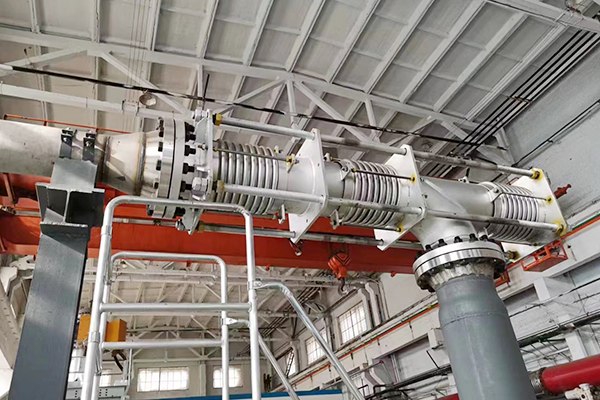
In the high-pressure long-distance industrial pipeline transmission system,thermal expansion and cold contraction of metal pipe bodies will produce huge axial thrust,lateral offset and angular torsion stress.If these displacement loads cannot be effectively released,pipeline welding seams,valve bodies and equipment interfaces will be subject to fatigue damage for a long time,and even safety accidents such as pipe burst and medium leakage will occur.Main Tie Rod Expansion Joints,as a professional anti-displacement compensation product,have become the preferred matching accessory for high-pressure large-diameter pipelines in thermal power,chemical industry,coal chemical industry and metallurgical industry by virtue of the stable limit protection structure of double main tie rods.Different from ordinary single tie rod expansion joints,the main tie rod structure can bear the blind plate force generated by pipeline internal pressure,avoid the bellows being stretched and damaged by medium pressure alone,and greatly improve the overall service life of the compensation device.
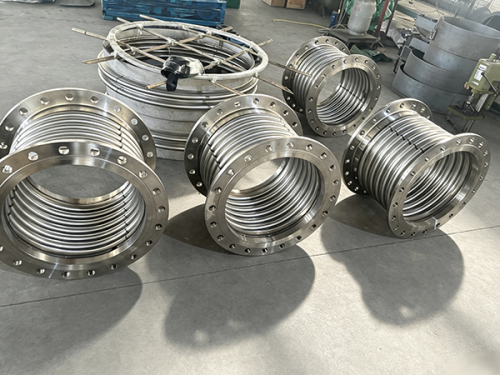
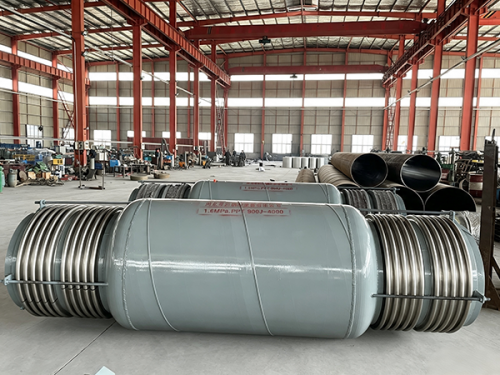
The core structure of standard main tie rod expansion joints is composed of stainless steel bellows,carbon steel main tie rod,adjustable limit nut,flange connecting end and sealing gasket.The bellows layer is the core flexible compensation part,which adopts multi-layer thin-wall stainless steel integral hydraulic forming process.The mainstream raw materials include 304 stainless steel,316L corrosion-resistant stainless steel and Hastelloy alloy,which can adapt to different medium environments such as clean water,high-temperature steam,acid-base corrosive liquid and flue gas.The main tie rod group is arranged symmetrically on both sides of the bellows,and the length of the tie rod can be adjusted according to the pipeline displacement parameters reserved in the design stage.Its core function is not only to limit the maximum expansion and contraction range of the bellows,but also to transfer the internal pressure blind plate force of the pipeline to the fixed support,so that the bellows only bear the displacement deformation load,and will not be pulled and damaged by the axial thrust of the medium.Many engineering designers ignore the bearing capacity of tie rods when selecting compensation devices,and simply choose ordinary unconstrained expansion joints,which leads to bellows tearing accidents within 3-6 months of pipeline operation,which is also the core advantage that main tie rod expansion joints can replace ordinary expansion joints in high-pressure working conditions.
In terms of material matching selection,different medium temperature and corrosion environments correspond to different collocation schemes of main tie rod expansion joints.For conventional circulating water pipelines with temperature lower than 120℃and neutral medium,the bellows can choose single-layer 304 stainless steel,the main tie rod adopts Q235B carbon steel with galvanized anti-corrosion treatment,and the flange connection end is integrated carbon steel flange,which can effectively control the overall procurement cost on the premise of meeting the compensation performance.When the pipeline transports high-temperature saturated steam with temperature between 200℃and 450℃,the bellows needs to be upgraded to double-layer 316L stainless steel,and the main tie rod surface is treated with high-temperature anti-oxidation coating to prevent the tie rod from softening and deforming under long-term high-temperature radiation.For chemical pipelines containing hydrochloric acid,sulfuric acid and other strong corrosive media,PTFE lined main tie rod expansion joints need to be selected.A layer of thick polytetrafluoroethylene lining is compounded inside the bellows to isolate the direct contact between corrosive liquid and metal bellows,and the outer main tie rod still maintains the pressure limiting protection function,which perfectly balances corrosion resistance and structural stability.
The standardized installation process directly determines the stable operation cycle of main tie rod expansion joints,and many on-site pipeline leakage problems come from non-standard construction links.First of all,before hoisting,the limit nuts on both sides of the main tie rod must be kept in the factory locking state,which is the temporary protection measure of the bellows during transportation.After the expansion joint is welded and fixed between the two pipe sections,the pipeline fixed supports on both sides are fully installed and reinforced,and the temporary limit nuts can be loosened according to the design reserved displacement value.If the limit nut is loosened in advance before the fixed support is completed,the bellows will bear the axial thrust alone during the pipeline pressure test,resulting in irreversible plastic deformation.Secondly,the welding operation needs to adopt argon arc welding for the inner layer to ensure the flatness of the inner wall of the pipeline,avoid welding slag splashing on the surface of the bellows,and the welding temperature cannot directly bake the flexible bellows part,otherwise the metal material will produce thermal fatigue cracks.After the welding is completed,the pipeline overall pressure test must be carried out step by step.The test pressure is 1.5 times the nominal working pressure.During the pressure maintaining process,it is necessary to regularly check whether there is looseness at the tie rod nut,water seepage at the flange gasket and micro-cracks on the bellows surface.
In the daily operation and maintenance stage of the pipeline system,regular inspection of main tie rod expansion joints is an indispensable link to extend the service life.It is recommended to conduct a comprehensive visual inspection every three months,focusing on checking whether the surface of the main tie rod has rust,bending deformation and thread sliding teeth;observe whether there are micro cracks,corrosion pits and bulging deformation on the wave crest and wave trough of the bellows;check the sealing performance of the flange gasket to find traces of medium leakage in time.For the pipeline equipment that runs continuously all year round,a comprehensive overhaul needs to be arranged every 18 months.The overhaul content includes disassembling and cleaning the tie rod thread,replacing the aging flange sealing gasket,detecting the wall thickness of the bellows with ultrasonic thickness gauge,and re-adjusting the reserved displacement range of the tie rod according to the actual thermal expansion data of the pipeline in the operation stage.In the maintenance process,it is forbidden to cut off the main tie rod arbitrarily,and it is also not allowed to add additional limit steel bars outside the tie rod without design approval,which will change the original stress balance structure of the expansion joint and lead to local stress concentration damage.
Combined with the actual engineering failure cases counted by the pipeline accessories industry,the top three common failure forms of main tie rod expansion joints are bellows corrosion perforation,main tie rod bending deformation and flange gasket aging leakage.The root cause of bellows perforation is that the material model selection does not match the medium corrosion performance,and the solution is to re-select alloy bellows or PTFE lined structure according to the actual medium composition;the bending deformation of the main tie rod mostly occurs when the pipeline sliding support fails and the lateral displacement exceeds the design range,and it is necessary to increase the lateral limit support and replace the deformed tie rod group;the leakage of the flange gasket is caused by the aging of the rubber sealing material under long-term high temperature,and the high-temperature resistant graphite composite gasket can be replaced to solve the problem.
To sum up,main tie rod expansion joints are not simple pipeline connecting accessories,but comprehensive compensation components integrating flexible displacement absorption and pressure load bearing.From the early design and model selection,medium material matching,standardized on-site installation to regular daily maintenance,every link needs to strictly follow the industrial pipeline design specifications.For pipeline engineers and equipment procurement personnel,fully mastering the structural characteristics and application limitations of main tie rod expansion joints can effectively reduce the failure rate of pipeline compensation links,avoid unnecessary shutdown maintenance losses caused by compensation device damage,and improve the overall operation safety and economic benefits of industrial pipeline transmission systems.
 Recommended Products
 CONTACT
—— Hotline:+86 18932765800
—— Email:hj18932765800@gmail.com
—— Whatsapp:+8618932765800
—— Address:Industrial Zone, Botou City, Hebei Province